If I could prescribe one thing to almost every patient that could improve their physical health, mental health, metabolic health, and chances of remaining independent as they age, it wouldn’t be a medication.
It would be exercise.
At Fit Rx Health & Wellness, Movement & Strength is one of our Seven Pillars of Optimal Health because the human body was designed to move. Unfortunately, modern life has made it remarkably easy not to.
We sit at desks. We drive everywhere. We spend evenings on the couch. And as we get older, many people gradually become less active without even realizing it.
The consequences go far beyond gaining a few pounds.
Regular movement, cardiovascular exercise, and resistance training can affect nearly every system in the body. That’s why exercise for healthy aging is one of the most powerful tools we have for maintaining health, function, and quality of life.
Muscle Is About Much More Than Appearance
When people hear “building muscle,” they often picture bodybuilding or trying to look better at the beach.
But muscle is much more important than that.
Skeletal muscle is metabolically active tissue that plays an important role in glucose regulation, insulin sensitivity, physical function, and metabolic health.
Unfortunately, we tend to lose muscle as we age, especially if we aren’t actively challenging our muscles.
Over time, that loss can contribute to weakness, decreased mobility, falls, metabolic dysfunction, and loss of independence.
That’s why maintaining muscle should be a priority throughout adulthood—not something we suddenly start worrying about when we’re 75.
Resistance training after 40 becomes increasingly important because we’re no longer just trying to build muscle. We’re fighting to preserve it.
Strength Is an Investment in Your Future
Think about what you want your life to look like at 70, 80, or even 90.
Do you want to be able to travel?
Carry groceries?
Get up off the floor?
Play with your grandchildren?
Hike?
Live independently?
Those things require strength.
We tend to think of exercise in terms of what it does for us today, but every workout is also an investment in the person you’ll be decades from now.
Building strength and muscle now creates a physical reserve that can help protect against the inevitable challenges that come with aging.
You don’t need to become a bodybuilder.
You simply need to challenge your muscles consistently.
For most adults, that means incorporating resistance training at least two or three times per week, using weights, machines, resistance bands, or body-weight exercises.
Don’t Forget About Your Heart and Lungs
Strength is only part of the equation.
Cardiovascular fitness is another major component of exercise and longevity.
One measurement I find particularly interesting is VO₂ max, which reflects your body’s ability to take in, transport, and utilize oxygen during exercise.
Higher cardiorespiratory fitness is strongly associated with better health outcomes and lower mortality risk.
The good news is that cardiovascular fitness is trainable.
Activities such as:
- Brisk walking
- Hiking
- Cycling
- Swimming
- Jogging
- Stair climbing
- Interval training
can all improve cardiovascular fitness.
You don’t have to run marathons. The goal is simply to regularly challenge your cardiovascular system while continuing to build and maintain strength.
Walking May Be One of the Most Underrated Forms of Exercise
Not every workout needs to leave you exhausted.
One of the simplest things you can do for your health is walk more.
Walking helps increase daily energy expenditure, supports cardiovascular and metabolic health, and keeps your body moving without creating significant recovery demands.
It also helps combat something that has become increasingly common in modern society: prolonged sitting.
You can work out for an hour every morning and still spend the other 15 waking hours barely moving.
That’s why I encourage patients to think about both exercise and movement.
Take the stairs.
Walk after dinner.
Park farther away.
Take a walking meeting.
Get outside.
Those seemingly insignificant choices add up over months and years.
Exercise Is Powerful for Metabolic Health
Movement is also one of our best tools for improving metabolic health.
Your muscles act as a major site for glucose disposal. When you exercise regularly and maintain adequate muscle mass, your body generally becomes better equipped to manage blood sugar.
Exercise can also help improve body composition, insulin sensitivity, blood pressure, cardiovascular health, and energy expenditure.
This becomes particularly important for patients trying to lose weight.
At Fit Rx Health & Wellness, I frequently emphasize that weight loss should not simply be about making the number on the scale smaller.
The goal should be to lose body fat while preserving as much muscle as possible.
That’s particularly important for patients using GLP-1 medications such as semaglutide or tirzepatide. When calorie intake drops significantly, resistance training and adequate protein become even more important for preserving lean mass.
Exercise Supports the Brain Too
The benefits of exercise aren’t limited to your muscles and heart.
Physical activity is also associated with better cognitive function, mood, sleep, and overall mental well-being.
And this illustrates something important about our Seven Pillars of Optimal Health:
The pillars don’t exist independently.
Movement can improve sleep.
Better sleep can improve recovery.
Exercise can improve emotional health.
Nutrition provides the protein and nutrients needed to build muscle.
Hormonal health can influence energy, body composition, recovery, and the ability to maintain muscle.
Each pillar affects the others.
That’s why optimizing one area while ignoring the rest rarely produces optimal health.
What Is the Best Exercise?
Patients sometimes ask me this question expecting a specific answer.
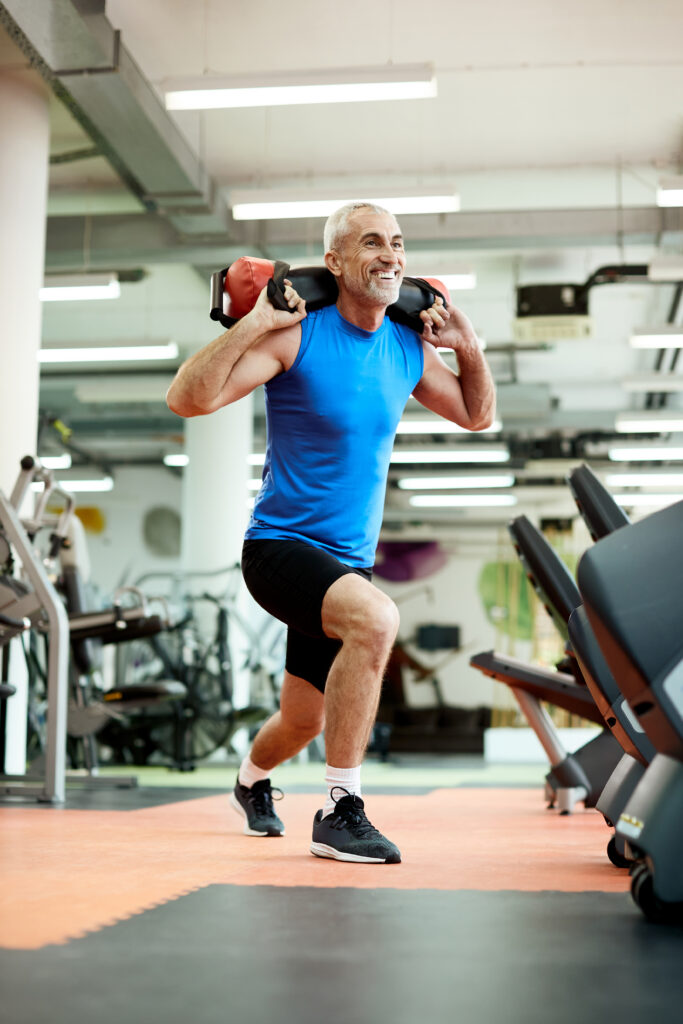
The best exercise program is one that incorporates several different components:
Resistance training to build and maintain muscle and strength.
Cardiovascular exercise to improve heart health and cardiorespiratory fitness.
Daily movement to prevent a sedentary lifestyle.
Mobility and balance to maintain function and reduce the risk of injury as you age.
And perhaps most importantly:
Choose activities you’ll actually continue doing.
The world’s most scientifically perfect workout isn’t very useful if you hate it and quit after three weeks.
Consistency beats perfection.
You Are Never Too Old to Start
One of the biggest misconceptions about exercise is that once you’ve reached a certain age, the damage is already done.
It isn’t.
People can improve strength, cardiovascular fitness, balance, and physical function well into older adulthood.
You may need to modify how you exercise because of injuries, arthritis, or other medical conditions, but aging should not automatically mean becoming sedentary.
In fact, that’s precisely when maintaining movement becomes even more important.
Start where you are.
Walk a little farther.
Lift something slightly heavier.
Add another workout each week.
Then gradually build from there.
Movement & Strength: One of the Seven Pillars of Optimal Health
There is no medication that can reproduce all of the benefits of regular physical activity.
Exercise can simultaneously improve strength, cardiovascular fitness, metabolic health, body composition, mobility, mood, and overall function.
That’s why exercise for healthy aging is not optional if your goal is to remain strong, capable, and independent throughout your life.
At Fit Rx Health & Wellness, our goal isn’t simply to treat disease.
We want to help patients build the health and physical capacity that allow them to continue doing the things they love for as long as possible.
Because longevity isn’t just about adding years to your life.
It’s about adding life to those years.
Want to know how your overall health measures up?
Our Seven Pillars of Optimal Health approach evaluates Sleep, Nutrition, Movement & Strength, Hormonal Health, Emotional Health, Relational Health, and Spiritual Health to help identify areas where you can improve.
Next in our Seven Pillars of Optimal Health series: Hormonal Health — Why hormones affect far more than libido.
Dr. Greg Dennis, DO
Fit Rx Health & Wellness
Tuttle, Oklahoma
Serving Tuttle, Mustang, Yukon & South Oklahoma City
405-384-4860